
"Bolivia coffee regions"
300 article(s) found

Introduction of high-quality coffee beans with rich sour taste in Bolivian coffee manor
In 1932, the Chaco War broke out between Bolivia and Paraguay for oil resources in the North Chaco region. Bolivia was defeated and lost a large area of territory. The people's armed uprising broke out in April 1952, and Paisdensolo, leader of the nationalist revolutionary movement, became president. Since then, there have been frequent military coups and long-term political instability. Modern assets with South American characteristics were restored in October 1983

The sour taste of citrus fruits the flavor and taste characteristics of Bolivian snow vein manor coffee
In 1932, the Chaco War broke out between Bolivia and Paraguay for oil resources in the North Chaco region. Bolivia was defeated and lost a large area of territory. The people's armed uprising broke out in April 1952, and Paisdensolo, leader of the nationalist revolutionary movement, became president. Since then, there have been frequent military coups and long-term political instability. Modern assets with South American characteristics were restored in October 1983

Fair Trade Association of Caranavi, Bolivia
Professional barista exchanges please follow the coffee workshop (Wechat official account cafe_style) Bolivia Caranavi (Karanawi) fair trade association organic beans Bolivia is a landlocked country known as the ancient plateau, coffee is mainly produced in the plateau 1200 ~ 2000 meters above sea level, the main producing areas are Caranavi Karanawi in the north and Santa Cruz Santa Cruz in the south

How does Bolivian coffee taste? how does Bolivian coffee taste? Bolivian coffee brewing suggestion
Professional coffee knowledge exchange more information about coffee beans Please follow the coffee workshop (Wechat official account cafe_style) if you want to talk about the paradise of coffee bean growth, it is Bolivia. This producing area can be regarded as one of the boutique coffee producing areas most recommended by the editor. Most of the coffee beans in this producing area are a little sweet and very pleasing, but the number of coffee beans is very small.

Introduction of high-quality coffee beans in Bolivian coffee flavor and taste areas
Bolivia was rescued from independence by Bolivar, a national hero from Caracas, Venezuela, during the War of Independence in Latin America in the 18th century, so the country was named after him. On August 6, 1825, independence from Spain was declared, named the Bolivarian Republic, and later changed to its present name. It formed a federation with Peru in 1836 and collapsed as a result of the Chilean invasion in 1839. one hundred and eighty six

Lake Titicaca Single-Grown Coffee Bolivia Koppa Cabana Smallholder Boutique Coffee
Flavor: Dry aromas of roasted nuts and almonds, soft fruit acids of orange and white pomelo on the palate, sweet caramel on the whole, smooth texture of nutty milk, cleanliness and balance are also quite eye-catching, and the herbal aroma of the aftertaste is quite charming. South America is rich in coffee beans, Bolivia is no exception, parts of Bolivia unique tropical rain forest environment, for organic coffee

A brief introduction to the planting market price of high-grade vanilla sweet Bolivian boutique coffee beans
The eastern and central part belongs to the savanna climate, the transition from the western mountain to the subtropical climate, and the inland plateau to the mountain climate. The climate in most areas is dry and cool; the annual precipitation decreases from 2000 mm to less than 100mm from northeast to west. [7] Natural resources are rich in mineral resources, including tin, antimony, tungsten, silver, zinc, lead, copper, nickel, iron, gold and so on. Abundant mineral deposits

Why is Bolivia called Coffee Paradise an introduction to the characteristics of coffee in La Paz, Bolivia
If you want to talk about the paradise of coffee beans, it is Bolivia. This producing area can be regarded as one of the most recommended boutique coffee producing areas. Most of the coffee beans in this producing area are a little sweet and very pleasing, but the number of coffee beans is very small. This country, located in Central and South America, is one of the five most diverse countries in the world, surrounded by five countries.

Bolivian Coffee Flavor description Grinding characteristics introduction of High-quality Coffee beans in producing areas
We know that Arabica coffee cannot be grown in cold places above 2000 meters above sea level. if the altitude is too high, coffee trees will frost because the temperature is too low. So Bolivian coffee is mainly grown in the Yungas region northeast of La Paz. It borders the Amazon basin and is about 1500-2500 meters above sea level with an average annual temperature of about 10-15 ℃. Therefore, guarantee

Introduction to the Flavor and Taste of High-quality Coffee Bean Manor
In 1863, rich saltpetre deposits were discovered in Atacama province along the Pacific coast. In 1879, Chile sent troops to occupy the mining area, and Bolivia joined forces with Peru to wage the Pacific War with Chile. Bolivia was defeated in 1883 and ceded the saltpeter-rich Pacific coast to Chile in 1904. Bolivia lost its only coastal province, including the important port of Antofagasta, from

Introduction to boutique coffee with obvious rich flavor and taste characteristics of Bolivian coffee manor
In 1863, rich saltpetre deposits were discovered in Atacama province along the Pacific coast. In 1879, Chile sent troops to occupy the mining area, and Bolivia joined forces with Peru to wage the Pacific War with Chile. Bolivia was defeated in 1883 and ceded the saltpeter-rich Pacific coast to Chile in 1904. Bolivia lost its only coastal province, including the important port of Antofagasta, from
Bolivian coffee flavor describes what is "tomorrow Sun Project" and Bolivian COE
Bolivian coffee beans are concentrated in rural areas of Yungas, with about 95 per cent of production. Other developing regions include Santa Cruz, Beni, Cochabamba, Tariha and Pando. Despite the existence of commercial farms and estates, the Government's land reform has expropriated most of the large land and redistributed it to rural families. These small plots of land cover an area of 1-8 hectares and produce

The taste of Bolivian coffee with a bitter taste an introduction to the characteristics of fine coffee in the manor area.
In 1863, rich saltpetre deposits were discovered in Atacama province along the Pacific coast. In 1879, Chile sent troops to occupy the mining area, and Bolivia joined forces with Peru to wage the Pacific War with Chile. Bolivia was defeated in 1883 and ceded the saltpeter-rich Pacific coast to Chile in 1904. Bolivia lost its only coastal province, including the important port of Antofagasta, from

Bolivia's Lake Titicaca small farmers water washing iron pica fine coffee beans cultivation geographical location
Lake Titicaca is located in Bolivia and Peru on the border of the Coyao Plateau, is South America's highest terrain, the largest area of freshwater lakes, is also one of the world's highest elevation of large freshwater lakes, or the world's highest ship navigable lake, is South America's third largest lake (after Lake Maracaibo and Patus Lagoon). Breed: Iron Pickup Producer: Kopanga

What is the difference between Bolivian coffee and Bolivian coffee?
Professional coffee knowledge exchange More coffee bean information Please pay attention to Coffee Workshop (Weixin Official Accounts cafe_style) Front Street-Bolivia Coffee Introduction Bolivia is located in South America and is surrounded by Brazil, Peru, Argentina, Paraguay and Chile. Bolivia is the poorest country in South America. Due to its backward basic conditions, coffee processing and delivery are not timely.
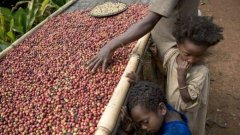
Lake Titicaca in Bolivia: water washing, iron washing, Pica boutique coffee beans, origin, development, history and culture
The advantage of Bolivian coffee lies in its high altitude and excellent varieties of coffee, where the traditional Tibica and a small amount of Kaddura are highly valued in the world market. In the past, coffee trees in Bolivia used to act as hedges and ornaments around the garden. Real commercial production began in the early 1950s. The great frost in 1957 seriously damaged Pakistan.

Illimani, Calanawi, Bolivia| Mamani Family Farm Organic Beans
Professional coffee knowledge exchange More coffee bean information Please pay attention to Coffee Workshop (Weixin Official Accounts cafe_style) Illimani Iimani Mountain, Calanawi Province, Bolivia| Mamani Family Farm Organic Bean Flavor? Bolivia is a landlocked country known as the ancient plateau, coffee is mainly produced in the plateau at an altitude of 1,200 2,000 meters, the main origin for the north Cara
Why does Bolivian coffee produce so little? Bolivian coffee bean flavor story
Professional coffee knowledge exchange more information about coffee beans Please follow the coffee workshop (Wechat official account cafe_style) if you want to talk about the paradise of coffee bean growth, it is Bolivia. This producing area can be regarded as one of the most recommended boutique coffee producing areas. Most of the coffee beans in this producing area are a little sweet and very pleasing, but the number of coffee beans is very small.

The story of growing La Llama coffee farm in Bolivia? What are the growing conditions of La Llama coffee?
Professional coffee knowledge exchange more coffee bean information please follow the coffee workshop (Wechat official account cafe_style) Bolivia La Llama coffee farm planting story? What are the growing conditions of La Llama coffee? This very special Java micro batch comes from a new farmer named Finca La Llama, who was planted in 2015.

Introduction to the original planting environment of Bolivian boutique coffee beans Xuemai Manor coffee flavor and taste
Bolivia boutique coffee beans legal capital, the seat of the Supreme Court, population 284000, 2790 meters above sea level. Founded in 1538, the city was formerly known as Chuquisaka. The city witnessed the first uprising in South America against Spanish rule in 1809. Bolivia declared its independence here in 1825, became its capital in 1826, and commemorated Antonio Jos é suk, the second president of Bolivia, in 1839.